
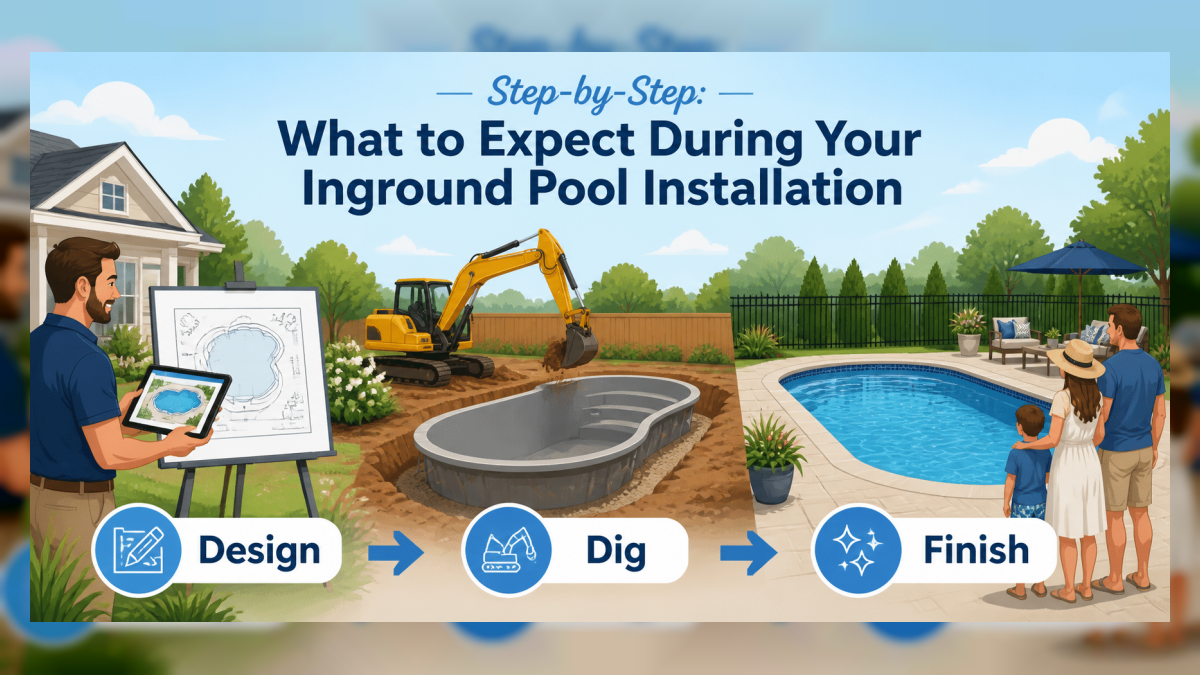
So you’ve finally decided to build an inground pool — exciting! But if you’ve never been through the process before, it can feel a little overwhelming. What happens first? How long does it take? What do you need to do before the digger shows up?
This guide walks you through every stage of inground pool installation, so you know exactly what to expect — and can feel confident every step of the way.
Why Knowing the Pool Installation Process Matters
Most homeowners focus on the fun part — picking the shape, the tiles, the lighting. But understanding the full installation process helps you:
- Set realistic timelines for your family
- Avoid costly surprises mid-project
- Ask the right questions when hiring a pool contractor
- Make decisions faster when your contractor needs your input
Let’s break it down, phase by phase.
Phase 1: Design & Planning
Before a single shovel hits the ground, you and your pool contractor will sit down to plan everything out.
What happens in this phase:
- You discuss your backyard layout, size preferences, and pool type (concrete, fiberglass, or vinyl liner)
- A site assessment is done to check soil conditions, drainage, and utility lines
- You finalize the design — shape, depth, features like steps, benches, or water features
- A detailed quote and project timeline are provided
What you’ll need to decide:
- Pool type and material
- Additional features (lighting, heating, waterfalls, spas)
- Budget range
- Preferred start date
Pro Tip: Don’t rush the design phase. Changes made on paper cost nothing. Changes made mid-dig can cost thousands.
Phase 2: Permits & Approvals
This is often the phase homeowners underestimate. In New York, inground pool installations require permits from your local municipality — and depending on your area, this can take anywhere from a few days to a few weeks.
Typical permit requirements include:
- Building permit for pool construction
- Electrical permit (for lighting, pumps, and heating)
- Fencing permit (most areas require a pool enclosure by law)
- Zoning approval to confirm setback distances from property lines
A reputable pool contractor will handle the permit process on your behalf and keep you updated on approvals.
Phase 3: Excavation
Once permits are approved, it’s time to dig. This is often the most dramatic day — heavy equipment arrives, and your backyard transforms quickly.
What to expect:
- Excavation crew marks the pool outline with spray paint or stakes
- A large excavator digs to the exact depth and shape of your pool design
- Excess soil is hauled away (this can be a significant amount — plan for it)
- Underground utilities are carefully avoided based on prior assessments
Excavation typically takes 1–3 days depending on pool size and soil conditions.
Phase 4: Structure & Shell Installation
This phase varies depending on your pool type:
Concrete/Gunite Pools:
- Steel rebar framework is installed to reinforce the structure
- Gunite (a mix of concrete and sand) is sprayed over the rebar
- The shell is left to cure for 7–10 days before the next steps
Fiberglass Pools:
- A pre-built fiberglass shell is craned into the excavated hole
- It’s leveled, set, and backfilled around the sides
- Much faster than concrete — shell installation can be done in a day
Vinyl Liner Pools:
- Steel or polymer wall panels are installed around the perimeter
- A custom vinyl liner is fitted and pressed into place
- Generally the most affordable option
Phase 5: Plumbing & Electrical
With the shell in place, your contractor installs all the systems that make your pool function.
Plumbing work includes:
- Main drain installation at the pool floor
- Return lines (which push filtered water back into the pool)
- Skimmer lines (which pull water off the surface for filtration)
- Lines for any water features, jets, or spa connections
Electrical work includes:
- Pool pump and filter wiring
- Underwater lighting
- Heater connections
- Automation systems (if selected)
All electrical work must meet local code and is inspected before proceeding.
Phase 6: Decking & Surroundings
Now your pool starts to look like the backyard oasis you imagined. Common decking options include: Concrete (broom finish or stamped), Natural stone or pavers, Travertine, Composite decking.
Your contractor will also install coping — the edging material that borders the pool — which both looks great and provides a non-slip surface. This is also when fencing, landscaping prep, and any outdoor lighting gets installed.
Phase 7: Interior Finish & Plaster
For concrete pools, the interior finish is one of the final steps — and one of the most satisfying to see.
Interior finish options:
- Plaster (classic white or tinted)
- Pebble aggregate (durable, textured look)
- Quartz (smooth, mid-range option)
- Tile finishes for a premium look
For fiberglass and vinyl pools, this step is largely skipped since the surface comes pre-finished.
Phase 8: Fill, Balance & Final Inspection (Week 5–6)
The pool is filled with water — which can take 24–48 hours depending on pool size and your water supply. Once filled, your contractor will:
- Balance the water chemistry (pH, alkalinity, chlorine levels)
- Run all equipment to check for leaks or issues
- Test every system — pumps, filters, lights, heating
- Walk you through how to operate and maintain your pool
A final municipal inspection is scheduled to confirm everything meets local code before the project is officially complete.
What Makes a Good Pool Contractor?
The installation process is only as smooth as the team handling it. Here’s what to look for:
- Licensed and insured — non-negotiable
- Handles permits — so you don’t have to chase paperwork
- Clear written contract — timeline, milestones, and payment schedule
- Transparent communication — keeps you updated at every phase
- Local experience — familiarity with your municipality’s code and inspection process
At Angels Pools, we manage the entire inground pool installation process from design to final inspection — so you can focus on looking forward to the first swim, not stressing over logistics.
Ready to Get Started?
An inground pool is one of the best investments you can make in your home and your lifestyle. The key is working with a contractor who knows the process inside and out — and keeps you informed every step of the way.
Contact us today to schedule a free consultation and get a custom quote for your backyard pool build.
👉 https://angels-pools.com/