
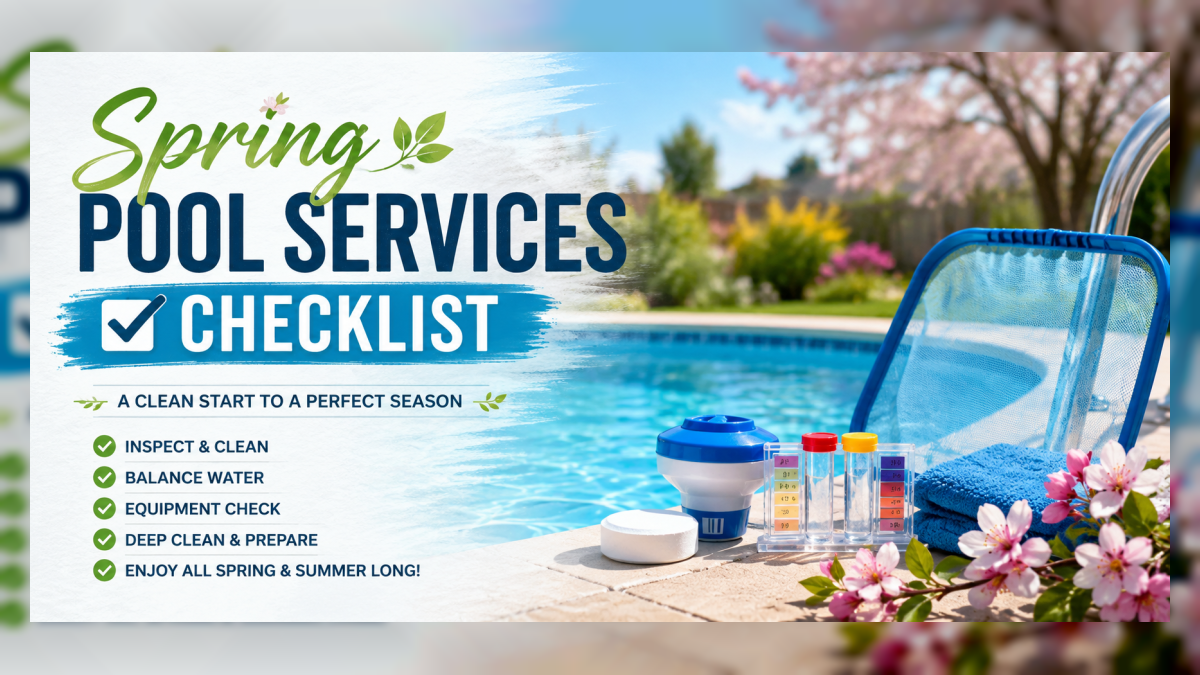
As temperatures rise and pool season approaches, spring is the perfect time to prepare your swimming pool for months of enjoyment ahead. After sitting unused through colder weather, pools often require thorough cleaning, inspections, and maintenance to ensure safe and efficient operation. Following a proper spring pool services checklist can help prevent costly repairs, improve water quality, and extend the life of your pool equipment.
Whether you own a residential backyard pool or manage a commercial property, this checklist will help you start the season the right way.
Why Spring Pool Maintenance Matters
Spring pool maintenance is more than simply removing the pool cover and adding chemicals. During winter, debris, algae, and equipment wear can create hidden issues that become expensive if ignored. Proper opening and servicing ensure:
- Clean and safe swimming water
- Efficient pool circulation
- Longer equipment lifespan
- Prevention of algae growth
- Reduced repair costs throughout the season
- Improved energy efficiency
A well-maintained pool also creates a more enjoyable swimming experience for family and guests.
Complete Spring Pool Services Checklist
1. Remove and Clean the Pool Cover
Start by carefully removing the pool cover to prevent debris from falling into the water. Clean the cover thoroughly using mild soap and water before allowing it to dry completely. Store it in a cool, dry place to avoid mold or damage.
Inspect the cover for:
- Tears or holes
- Mold and mildew
- Damaged straps or anchors
- Excessive wear
2. Clear Debris from the Pool
Leaves, dirt, insects, and debris often accumulate during winter. Use a pool skimmer and vacuum to remove all debris from the water and pool floor.
3. Inspect Pool Equipment
Pool equipment should always be inspected before restarting the system for spring.
- Pool Pump: Ensure the pump powers on correctly, listen for unusual noises.
- Pool Filter: Clean or replace filter cartridges.
- Heater: Inspect for corrosion or damage.
- Plumbing Lines: Look for leaks or cracked pipes.
4. Check Water Levels
Water levels may drop over winter due to evaporation or leaks. Ensure the water reaches the midpoint of the skimmer opening for proper circulation.
5. Test and Balance Pool Water Chemistry
Balanced water chemistry is critical for swimmer safety and equipment protection. Ideal ranges typically include:
- pH: 7.2–7.6
- Chlorine: 1–3 ppm
- Total alkalinity: 80–120 ppm
6. Brush and Vacuum Pool Surfaces
Even if the pool appears clean, algae and dirt may cling to walls and surfaces. Brush all areas and vacuum thoroughly.
7. Inspect Pool Safety Features
Inspect pool fences, gates, alarms, and covers to ensure all safety equipment complies with local regulations.
8. Run the Filtration System
After cleaning and balancing the water, run the filtration system continuously for at least 24–48 hours to circulate chemicals evenly.
9. Schedule Professional Pool Inspection
While DIY maintenance is helpful, professional inspections can identify hidden issues before they become serious.
Final Thoughts
Preparing your pool for spring requires more than a quick cleaning. A complete spring pool services checklist helps ensure your pool remains safe, clean, and fully functional throughout the swimming season.
If you are looking for reliable pool maintenance, repairs, and seasonal pool services, consider working with experienced professionals like Angels Pools to help keep your pool in excellent condition year-round.