
You’ve built the pool. Now comes the question every homeowner eventually has to answer — what goes around it?
The stone you choose for your pool deck does more than just look good. It affects how safe the surface is when wet, how hot it gets under the summer sun, how much maintenance you’ll be doing every year, and ultimately, how much your backyard investment holds its value over time.
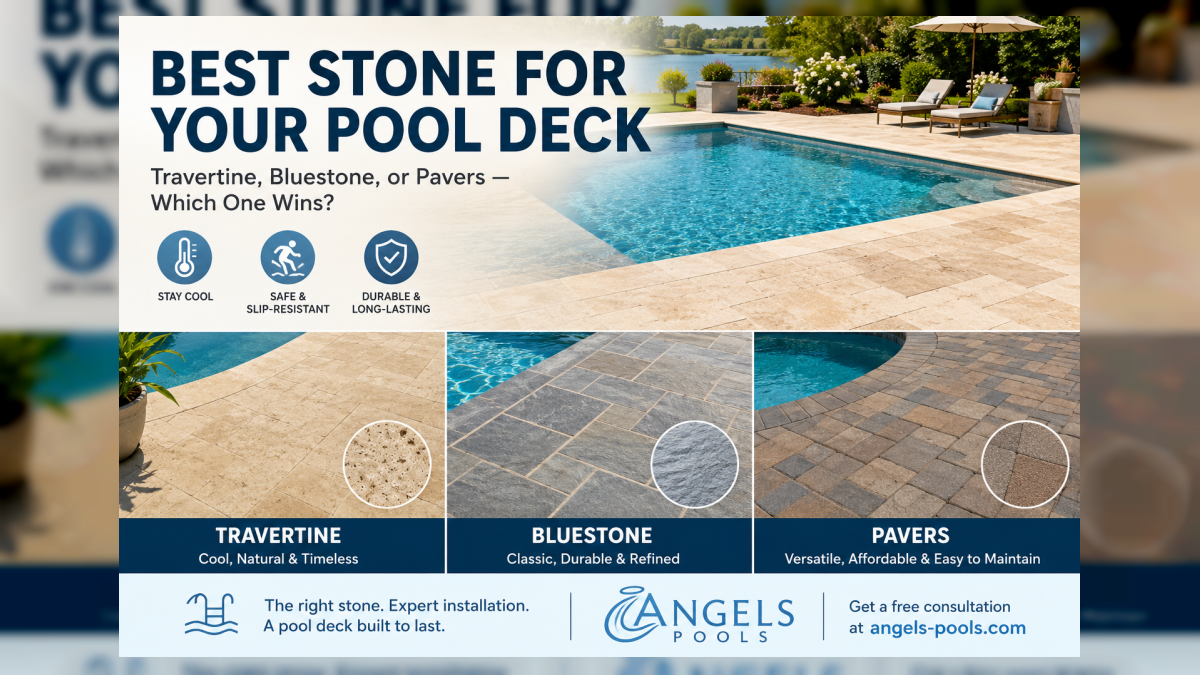
Three materials come up again and again in pool deck projects: travertine, bluestone, and concrete pavers. Each has real strengths — and real trade-offs. This guide breaks it all down so you can make the right call for your home, your lifestyle, and your budget.
Why the Right Stone Matters More Than You Think
A lot of homeowners treat the pool deck as an afterthought — something to figure out after the pool is done. That’s a mistake.
Your pool deck is the most used surface in your backyard. It takes foot traffic, pool chemicals, sun exposure, and seasonal freeze-thaw cycles year after year. Choosing the wrong material means cracked surfaces, slippery finishes, sky-high maintenance costs — or all three.
The right stone, properly installed, can last decades and make your entire backyard feel like a high-end retreat.
Option 1: Travertine
Travertine is a natural limestone formed by mineral springs over thousands of years. It comes in warm, earthy tones — creamy ivory, soft tan, and golden beige — and has a timeless, resort-style look that’s incredibly popular right now.
Why homeowners love it:
- Stays noticeably cooler underfoot than most other stones — even on the hottest summer days, travertine remains comfortable to walk on barefoot.
- Naturally porous, textured surface provides excellent grip when wet, making it one of the safest options for pool decks.
- The warm tones complement a wide range of pool designs, from Mediterranean to modern.
- Adds significant visual appeal and resale value to the home.
What to keep in mind:
- Requires sealing every 1–2 years to protect against staining from pool chemicals and sunscreen.
- Softer than bluestone, so it can chip or scratch if heavy furniture is dragged across it.
- Slightly higher upfront material cost compared to pavers.
Best for: Homeowners who want a luxury, resort-style aesthetic and are comfortable with annual maintenance.
Option 2: Bluestone
Bluestone is a dense, blue-gray sandstone quarried right here in the Northeast — including parts of New York and Pennsylvania. It has a classic, refined look that blends naturally with traditional home styles and established landscaping.
Why homeowners love it:
- Classic Northeast aesthetic that complements colonial, craftsman, and traditional home styles beautifully.
- Denser and less porous than travertine, so it doesn’t need sealing as frequently — many homeowners go 2–3 years between applications.
- Highly durable and resistant to chipping and scratching.
- Develops a natural patina over time that many homeowners find adds character.
What to keep in mind:
- Darker blue-gray varieties absorb more heat and can become uncomfortably hot in direct sunlight.
- Surface finish matters — a thermal or natural cleft finish gives good traction, but honed or polished bluestone can get slippery when wet. Always specify the right finish for a pool deck.
- Generally a higher price point than pavers, though similar to travertine.
Best for: Homeowners who want a timeless, classic look that requires less ongoing maintenance.
Option 3: Concrete Pavers
Concrete pavers are manufactured units available in a wide variety of sizes, shapes, colors, and textures. Modern pavers have come a long way — many are designed to mimic the look of natural stone at a more accessible price point.
Why homeowners love it:
- Most budget-friendly option of the three.
- Huge variety of styles, colors, and shapes — easy to match any aesthetic.
- If a paver cracks or gets damaged, individual units can be replaced without redoing the entire deck.
- Many options are specifically textured for slip resistance around pools.
- Low maintenance — generally just sweeping and occasional rinsing.
What to keep in mind:
- Can look less premium than natural stone, especially up close.
- Colors can fade over time with UV exposure.
- Concrete pavers absorb and retain heat more than travertine, though less than darker stone varieties.
Best for: Homeowners working with a tighter budget or who want maximum flexibility in design and easy future repairs.
Side-by-Side Comparison
| Features | Travertine | Bluestone | Concrete Pavers |
|---|---|---|---|
| Look & Feel | Warm, resort-style | Classic, timeless | Versatile, varied |
| Slip Resistance | Excellent (natural texture) | Good (with right finish) | Good (textured options) |
| Heat Underfoot | Cool | Can get hot | Moderate |
| Durability | Good | Excellent | Good |
| Maintenance | Seal every 1–2 years | Seal every 2–3 years | Minimal |
| Cost (approx.) | $$$ | $$$ | $$ |
| Repairability | Moderate | Moderate | Easy (replace individual units) |
What About Pool Coping?
Pool coping is the stone that caps the edge of your pool — the transition between the water and the deck. It’s one of the most important material decisions you’ll make, because it affects both safety and the overall look of your pool.
A few things to consider when choosing coping:
- Match or complement your deck material — travertine coping pairs naturally with a travertine deck; bluestone coping works beautifully with bluestone or paver decks.
- Travertine coping stays 20–25°F cooler than concrete coping in direct sun — a meaningful difference when bare feet are constantly at the pool’s edge.
- Edge profile matters — a bullnose (rounded) edge is the safest option for families with children; a cantilevered edge gives a more contemporary look.
Don’t treat coping as an afterthought. It’s the finishing detail that ties your entire pool together.
How to Make the Right Choice for Your Backyard
Still unsure which material is right for you? Ask yourself these questions:
- What’s my priority — looks, safety, maintenance, or budget? If safety and cool underfoot are top priorities, travertine wins. If budget is the primary concern, pavers are the smart move.
- What style is my home? Traditional homes suit bluestone beautifully. More contemporary or Mediterranean-inspired homes look stunning with travertine.
- How much time am I willing to spend on upkeep? If you want to set it and forget it, pavers or bluestone require less frequent care.
- What’s my long-term plan? Natural stone generally adds more resale value than concrete pavers — worth considering if you’re investing in your home long term.
Getting the Installation Right
Even the best stone will underperform if it’s installed incorrectly. Around pools, proper drainage grading, expansion joint placement, and base preparation are non-negotiable. A rushed or poorly executed install can lead to cracking, water pooling, or surface shifting within a single season.
That’s why material choice and contractor choice go hand in hand. At Angels Pools, we handle both — helping you pick the right stone for your space and installing it properly from the ground up.
👉 Get a free consultation at angels-pools.com