When to Open Your Pool in New York — and the Spring Checklist That Follows
Open once the water holds near 60°F — mid-April to mid-May in Westchester. Then the nine-step checklist, the New York barrier rules, and why a late opening is what turns a pool green.
A Westchester pool spends about half the year under a cover. What decides whether it opens clear or opens green is not the work you do in June — it is a handful of weeks in spring, and mostly it is the date you pick.
Here is the straight answer, then the checklist.
Quick answer: When should you open your pool in New York?
Open once the water is holding near 60°F — usually mid-April to mid-May around Westchester County. The point is to get the cover off before the water warms past 60°F, because that is where algae becomes active. Then clean the cover, clear the debris, bring the water level up, restart and inspect the equipment, balance the chemistry to a pH of 7.2–7.6, and run the filter for 24–48 hours.
Why Opening Late Is What Turns a Pool Green
It is the mirror image of closing too early. Closing in warm water burns off the winter chemicals; opening in warm water hands algae a head start it already took.
By March the chlorine put in at closing is long spent. Under a dark cover there is no circulation, no sanitiser and no one looking. As the water creeps past 60°F, algae starts to multiply in exactly those conditions — and it does it quietly, for weeks, while the cover is still on.
That is why a pool opened on Memorial Day weekend so often turns into a recovery job rather than an opening. The green did not arrive that week. It had been growing since April.
The economics run the same way they do in autumn: a few extra weeks of filtration in spring costs less than the chemicals, the service visits and the lost swim time it takes to clear a pool that has gone over.
When Is the Best Time to Open a Pool in Westchester County?
| Timing | What it means for your pool |
|---|---|
| Late March to early April | Early. Fine in a mild year, but once the lines are charged a hard overnight freeze can still reach them. |
| Mid-April to mid-May | The window for most Westchester pools. Cover off before the water passes 60°F, freeze risk largely behind you. |
| Late May | Late. Algae has had weeks of warm, still water, and the opening often becomes a clean-up. |
Where you are in the county moves the date. Pools on the higher, more open ground inland — Somers, Patterson, Pawling — warm later than the sheltered ones nearer Long Island Sound at Mamaroneck or Port Chester. Go by your own water, not by the calendar or by a neighbour two towns over.
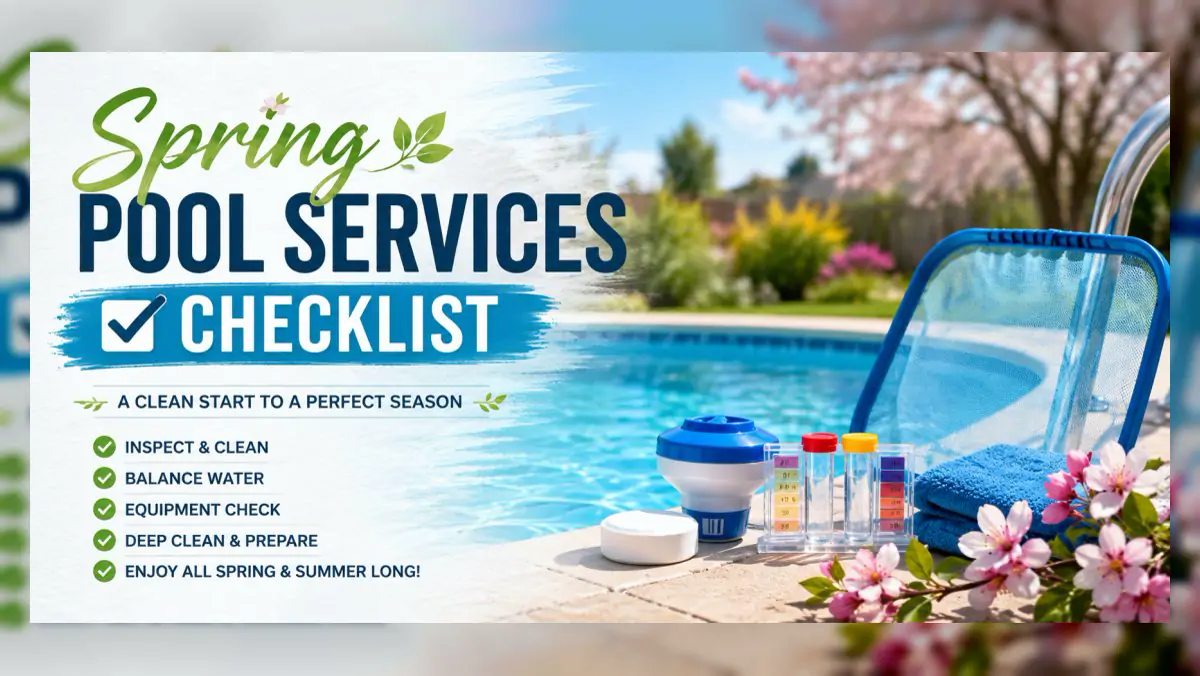
The Spring Pool Opening Checklist
1. Clear the cover before you pull it
Pump the standing water off and sweep the debris away first. A cover dragged off while it is still loaded tips every bit of it into the pool, which is how an opening turns into a day of vacuuming.
2. Clean the cover, then store it dry
Wash it, let it dry completely, and put it away somewhere cool and dry — a cover folded away damp is a cover that comes out of storage mildewed. While it is spread out, check it over for tears, thin patches, and worn straps or anchors. Spring is when you find out whether it has another winter in it, not November.
3. Clear the pool
Skim and vacuum out whatever got in over the winter. Leaves that have sunk and sat will stain a plaster finish, so they are worth getting out before the water warms.
4. Bring the water level back up
The level was dropped at closing and evaporation will have taken more. Bring it back to the middle of the skimmer opening so the system can actually circulate.
5. Reconnect and inspect the equipment
Put the drain plugs back, reconnect the lines and look over the pump, filter and heater before anything is switched on. You are looking for cracked housings, corrosion and perished seals — freeze damage from the winter shows up here. If something is past saving, these are the pool equipment brands we install and service.
6. Reinstall the ladders, rails and accessories
Check the anchors and bolts as they go back in rather than after.
7. Prime the system and start it up
Start the pump, let the air work its way out, and then watch the joints and the equipment pad for a few minutes. A weeping fitting found on day one is a small job; found in July, after it has been running all season, it is not.
8. Test and balance the water
Get the chemistry right before anyone swims and before the water warms:
- pH: 7.2–7.6
- Chlorine: 1–3 ppm
- Total alkalinity: 80–120 ppm
9. Run the filter, then brush and vacuum
Run the filtration continuously for 24–48 hours so everything circulates, then brush the walls and floor and vacuum again. Water that looks clear can still have algae gripping the surfaces.
Check the Barrier and the Alarm Before the Season
Spring, with the cover off and the equipment already being looked at, is the sensible time to check the safety side — not the week the children want to swim.
New York sets these statewide rather than town by town: a barrier at least 48 inches high measured from the outside, no more than two inches of gap beneath it, openings too small to pass a four-inch sphere, and gates that self-close and self-latch with the latch at least 54 inches up. Any residential pool built since December 2006 also needs a pool alarm. Where a wall of the house forms part of the barrier, a powered safety cover is one of the approved alternatives.
Winter is hard on all of it. Frost heave moves gate posts and throws latches out of alignment, and a self-latching gate that no longer catches is the single most common thing we find in spring. Permits come from your village, town or city, so check the local detail with them — but the requirements above do not change between them.
What a Professional Spring Opening Includes
A professional opening covers the whole sequence above, and the reason to have the same crew do your opening and your closing is that they already know how the pool was put away.
Spring is also when the jobs that need the water down get decided. Re-plastering, waterline tile, coping repair and liner replacement are all easier to plan now than in July, and a liner or a finish that looks tired on opening day will not improve over a season.
Frequently Asked Questions About Opening a Pool in New York
When should I open my pool in New York?
Open once the water is holding near 60°F, which around Westchester County usually falls between mid-April and mid-May. Getting the cover off before the water passes 60°F is what keeps algae from taking hold under it.
Is it bad to open a pool too early?
Early is far safer than late. The one real risk is a hard overnight freeze reaching plumbing that has already been charged, so in a cold spring it is worth watching the overnight lows. Algae, by contrast, is a certainty if you leave it too long.
Why does my pool open green every spring?
Almost always because it was opened after the water had already warmed past 60°F, or because the water was not balanced at closing. Algae grows under the cover through April whether anyone is looking or not. Opening earlier is the fix.
Can I open my pool myself?
You can do the cover, the debris and the water level without any trouble. The part worth care is restarting the equipment: plugs left out, a pump run dry, or freeze damage missed on a cracked housing all turn a morning into a repair bill.
What should pool water be balanced to at opening?
A pH of 7.2–7.6, chlorine at 1–3 ppm and total alkalinity between 80 and 120 ppm. Balance it before the water warms rather than after.
Do I need a pool alarm in New York?
Any residential pool built since December 2006 does. The barrier rules that go with it — 48 inches high, under two inches of clearance beneath, self-closing and self-latching gates — are set by the state, so they are the same wherever in New York you are.
Book Your Spring Opening With Angel’s Pools
Angel’s Pools has been opening and closing pools around Peekskill and across Westchester County since 1998, family-run, with the same crew doing the pool care and the stonework around it.
Get in touch or call (914) 737-1445 and we will work out the right date for your pool.