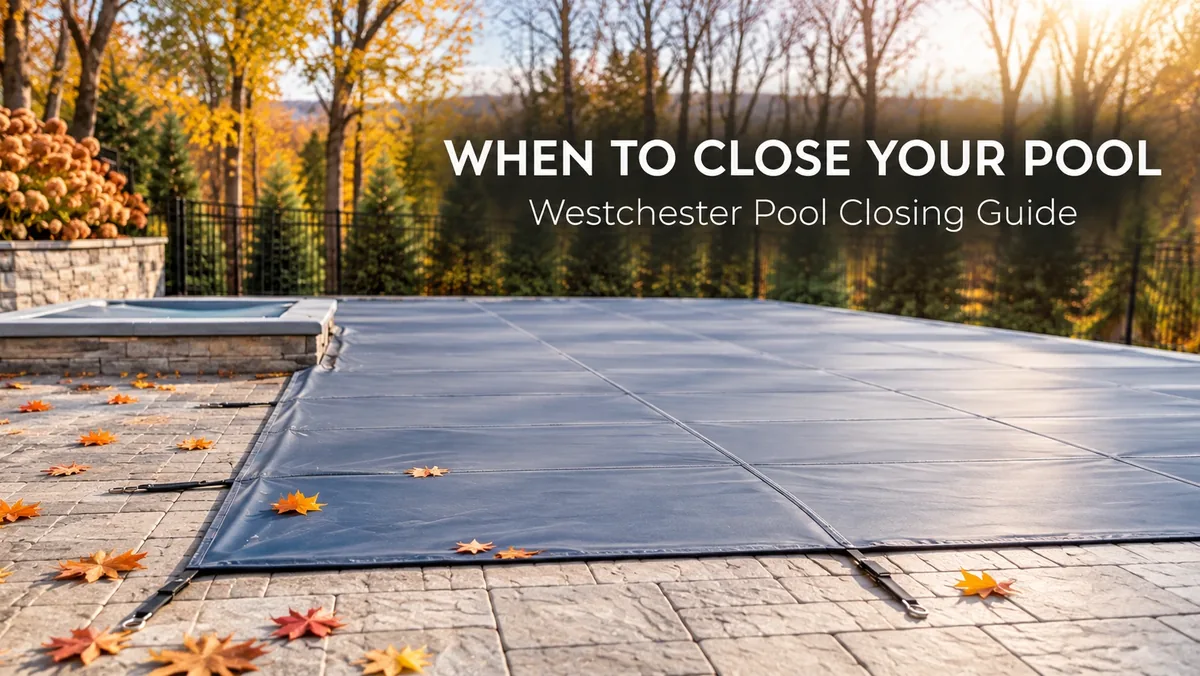
When Should You Close Your Pool in Westchester? The 65° Rule That Saves Your Spring
Close when the water holds below 65°F — usually mid-October to early November in Westchester. Closing early is why pools open green.
The kids are back in school, the leaves are turning, and the pool hasn’t seen a swimmer in weeks. It’s tempting to call your pool company and close it up today.
But here’s what many Westchester homeowners learn the hard way: closing your pool too early is one of the most expensive mistakes you can make. It’s the number one reason pools open green, slimy, and full of algae in the spring.
So when is the right time? Here’s the straight answer, then the details.
Quick answer: When should you close your pool in Westchester?
Close your pool when the water temperature stays below 65°F for several days in a row. In Westchester County and the Peekskill area, that usually happens between mid-October and early November. Close before the first hard freeze, but not while warm days are still in the forecast. Below 65°F, algae grows slowly and your winter chemicals last until spring.
What Is the 65-Degree Rule for Closing a Pool?
The 65-degree rule says you should wait to close your pool until the water (not the air) stays below 65°F. Pool professionals use it because algae and bacteria grow far more slowly in cool water.
Air temperature can fool you. A chilly September morning doesn’t mean your pool water has cooled. Pool water holds heat for days, so a single cold snap won’t drop it below 65°F.
How to check: Drop a floating pool thermometer in the water and check it at the same time each afternoon for a week. When it reads below 65°F day after day, you’re in the closing window.
What Happens If You Close Your Pool Too Early?
If you close your pool while the water is still warm, your winter chemicals burn off fast and algae takes over under the cover. That’s why so many pools open green in May.
Here’s what happens step by step:
- Warm water eats up chlorine. Heat breaks down chlorine and winterizing chemicals much faster, just like on a summer heat wave.
- Algae gets a head start. With the chemicals used up and the pump turned off, algae spores multiply under the cover all fall.
- You open to a swamp. Instead of clear water in spring, you find a green, slimy pool.
- You pay for it twice. Clearing a green pool can mean hundreds of dollars in extra chemicals, extra service visits, and sometimes draining the pool. Plus you lose weeks of swim season waiting for it to clear.
In short: a few extra weeks of running your pump in October costs far less than a green-pool cleanup in May.
Can You Wait Too Long to Close Your Pool?
Yes. Waiting past the first hard freeze puts your pipes, pump, filter, and heater at risk. Water left in the plumbing expands when it freezes and can crack lines and equipment.
Westchester’s freeze-thaw winters are hard on pools. An overnight freeze in late fall can damage plumbing before the lines are blown out and plugged. Repairs often run into four figures and show up as a surprise at spring opening.
Late fall also brings leaves. Once peak foliage hits, an open pool fills with leaves fast. Leaves that sink and sit stain the pool finish and feed algae. If your yard has a lot of trees, a leaf net over the cover is worth asking about.
Bottom line: Don’t close too early, and don’t wait for the first freeze. Aim for the window in between.
When Is the Best Time to Close a Pool in Westchester County?
For most pools in Westchester County, Peekskill, and the nearby Hudson Valley, the best time to close is mid-October to early November. That’s when water temperatures usually settle below 65°F and before hard freezes arrive.
| Timing | What it means for your pool |
|---|---|
| Early to mid-September | Too early for most pools. Water is still warm, and algae risk is high. |
| Late September to early October | Borderline. Close only if your water already stays below 65°F. |
| Mid-October to early November | The sweet spot for most Westchester pools. |
| Mid-November and later | Risky. Freeze damage to plumbing becomes more likely. |
Tip: Pool companies’ closing calendars fill up fast as temperatures drop. Book your closing date now, even if it’s a few weeks out, so you get the slot you want.
5 Signs It’s Time to Close Your Pool
Your pool is ready to close when most of these are true:
- Water temperature has stayed below 65°F for at least several days in a row.
- The 10-day forecast shows no more warm spells, with no days back in the 70s.
- Nighttime lows are dropping toward freezing, so you want lines blown out soon.
- Leaves are falling heavily and you’re skimming every day just to keep up.
- Nobody has used the pool in weeks and you’re not planning to heat it.
If you’re seeing the first three, it’s time to book your closing.
What Does a Professional Pool Closing Include?
A proper pool closing protects your water, your equipment, and your plumbing until spring. A professional closing typically covers:
- Balancing the water (pH, alkalinity, and calcium hardness) so the finish and liner stay protected
- Shocking and adding winterizing chemicals while the pump is still running, so they circulate fully
- Lowering the water level to the right height for your cover type
- Blowing out and plugging the plumbing lines so no water is left to freeze
- Draining and winterizing the pump, filter, and heater
- Removing ladders, rails, and accessories
- Installing your winter or safety cover securely, with no gaps
Avoid this DIY mistake: Never use car antifreeze in your pool lines. Use only antifreeze made for pools.
Using the same company for your closing and spring opening helps too. The team that closed your pool knows exactly how it was left and can open it faster.
Frequently Asked Questions About Pool Closing in Westchester
What temperature should pool water be before closing?
Pool water should stay below 65°F for several days before you close. At that temperature, algae growth slows down and winter chemicals last through to spring.
Is it better to close a pool early or late?
It’s better to close a little late than too early, as long as you close before the first hard freeze. Closing early in warm water is the most common cause of a green pool in spring.
What month do most people close their pools in New York?
In the Westchester and lower Hudson Valley area, most pools close between mid-October and early November. Pools farther north usually close a few weeks earlier.
Why did my pool turn green over the winter?
The most common reasons are closing while the water was still warm, unbalanced water at closing, or sunlight and debris getting under the cover. A properly timed closing with balanced water prevents most green openings.
Can I keep running my pump in October?
Yes. Running your pump and keeping chlorine levels up through early fall keeps the water clean until it’s cool enough to close. Just watch overnight lows so the plumbing doesn’t freeze.
How far in advance should I book a pool closing?
Book two to four weeks ahead. Closing schedules fill up quickly in October once temperatures start to drop.
Book Your Pool Closing With Angel’s Pools
The best pool closing is a well-timed one. Angel’s Pools serves homeowners in Peekskill and across Westchester County. We’ll help you pick the right closing date, balance your water, winterize your equipment, and secure your cover, so you open to clear water next spring.
Closing dates are filling up for October and November. Contact Angel’s Pools today to reserve your spot.